The Skrei Adventure – Join us for the ultimate winter fishing adventure
Read more


What tackle do you need? How should you work the bait? Where do you look for halibut, and what do you do when a 30, 40 or even 50-kilogram fish suddenly takes your bait?
That is exactly what our group trip “Halibut Fishing with Marcus Dietze” on Sørøya is all about.

We fish in September, when the coast of Northern Norway offers excellent opportunities to target halibut, including in relatively shallow water.
But catching fish is only part of the experience.
The trip combines halibut fishing in Northern Norway with practical fishing instruction, guiding and the experience of fishing together as a group. Beginners have plenty of opportunities to learn, experienced sea anglers can develop their skills further, and everyone benefits from sharing knowledge and experiences within the group.
And, of course, most importantly, it is about fishing and sharing those experiences with others.

Sørøya, often referred to as the Island of Giants, has a special reputation among sea anglers. Cod, coalfish and other species are regularly caught in these waters.
But there is one clear target species on this group trip:
Halibut.
In September, the trip therefore focuses on fishing grounds and techniques that allow participants to specifically target Atlantic halibut.
This is where one of the main advantages of joining a guided group trip quickly becomes clear. If you are fishing specifically for halibut for the first time, you do not have to spend years figuring out the fundamentals by yourself.
Marcus Dietze shares his experience directly on the water, explaining what matters when it comes to tackle, bait presentation, choosing the right fishing grounds and fighting a powerful halibut. He shows you what to keep in mind regarding tides and currents, and how to interpret sea map to ensure your success.
The journey begins long before the first fish
The entire trip was organised through DinTur, including flights, hotel accommodation and transfers to and from Sørøya Havfiske og Rorbu.
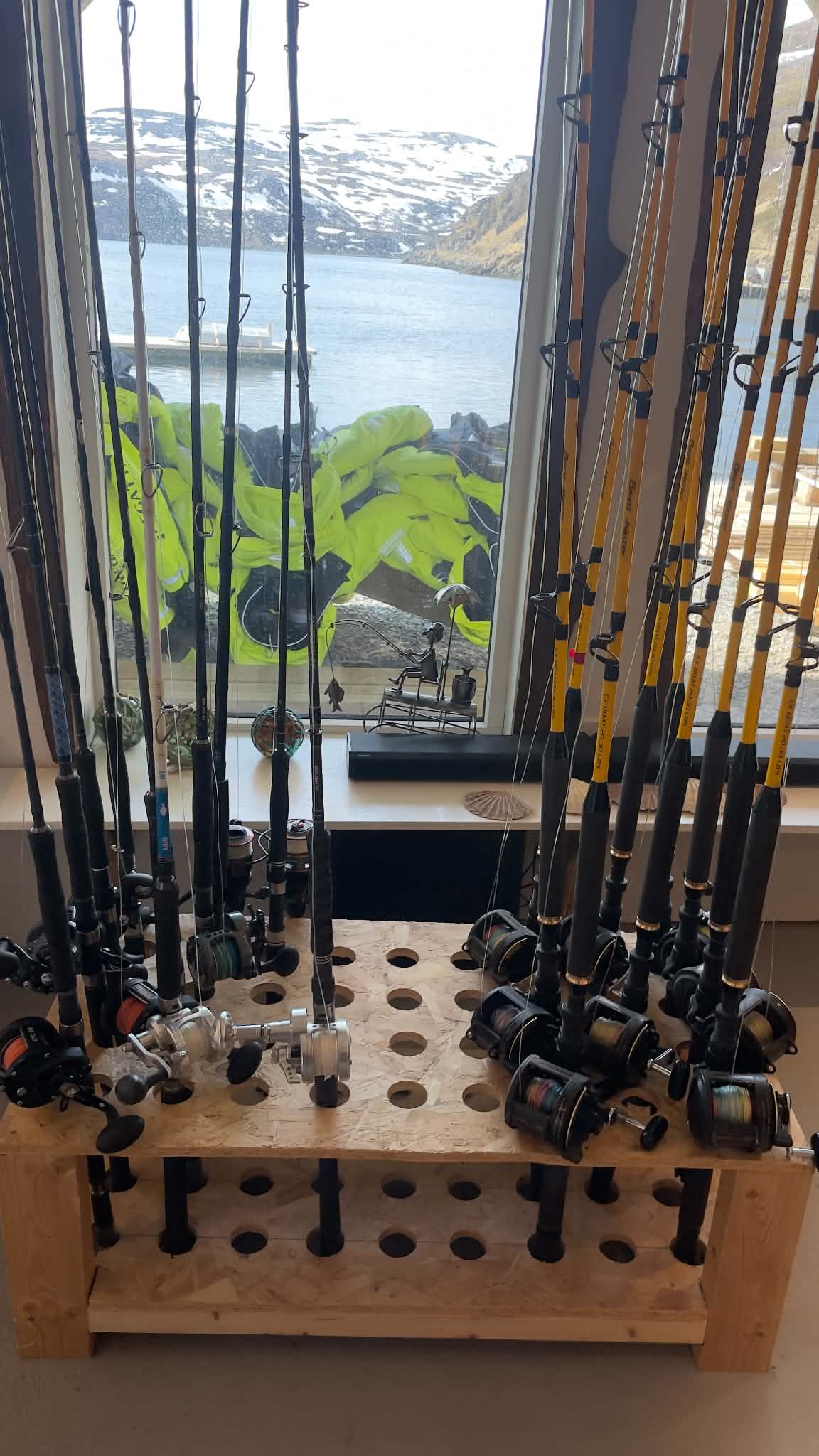
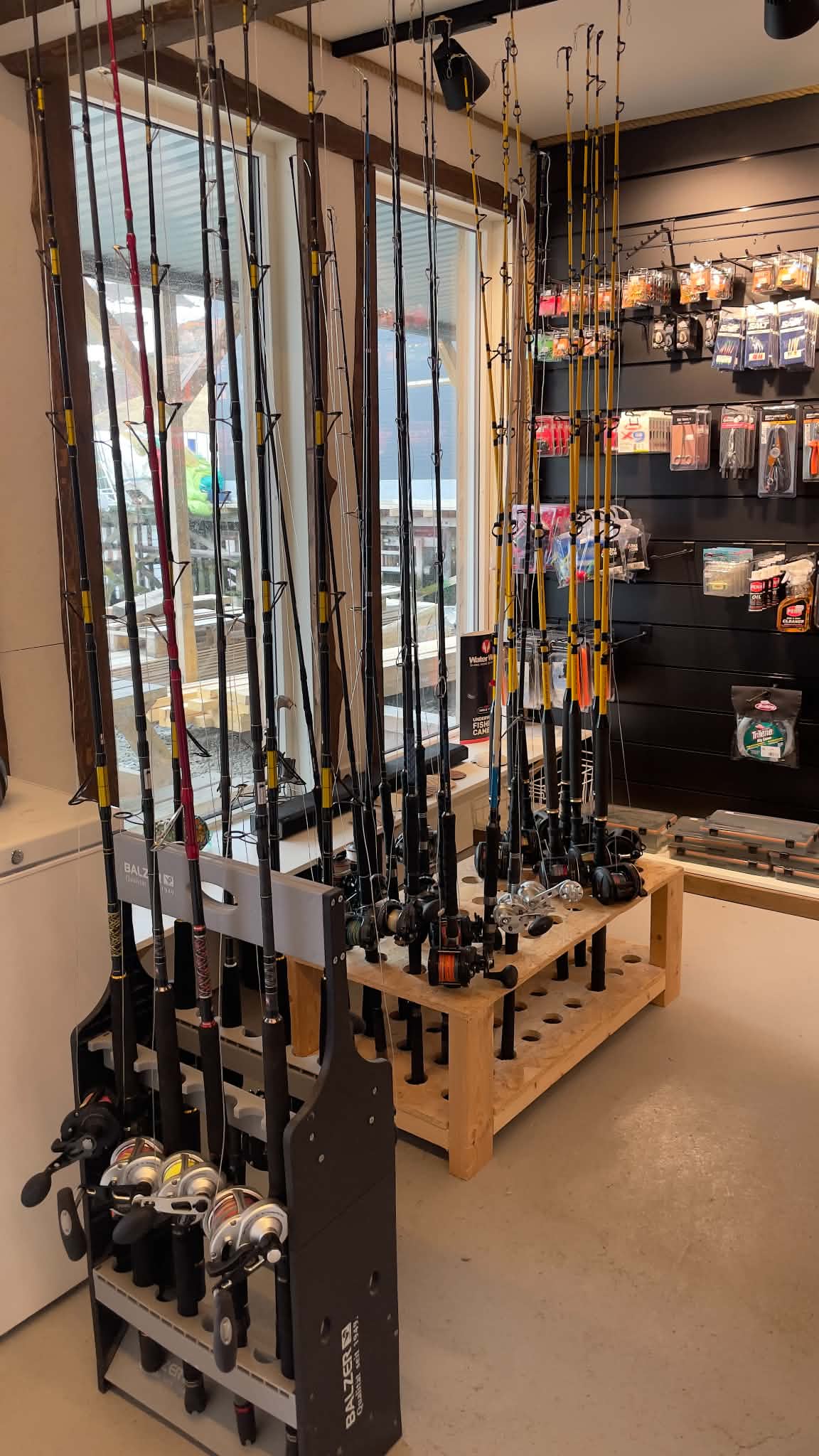
At the camp, the participants were welcomed by comfortable accommodation and modern cabin boats. The facilities also include a practical fileting room with scales, freezer capacity and a well-stocked fishing tackle shop.
If any participants needed any supplies, they could get them at supermarket right next to the camp that offers everything you need for your stay.
Everything was ready and now the real adventure could begin.

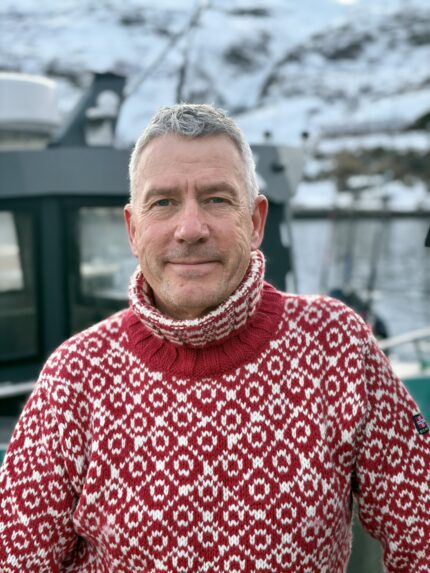
After arrival, the group was welcomed by Marcus Dietze, guide and manager of the fishing camp.
Before heading out for the first fishing session, there were a few important things to take care of:
The tackle check is a particularly important part of the trip.
When fishing for halibut, reel, line, leader, knots and rig all have to work together. A big halibut has a habit of exposing weaknesses in your equipment much faster than you might like.
And then it was finally time to head out.
Day 1:
The trip could hardly have started any better.
During the very first fishing session, the group landed five halibut. Better still, they did not have to travel far offshore to find them. The fish were caught on fishing grounds close to the camp.
Several other good fish were lost during the fight. That is part of halibut fishing, but it also showed the group on their very first day just how much potential these waters have.


The success continued on the second fishing day.
Across the two boats, the group caught a total of seven halibut.
At the same time, the lessons from the initial briefing and first day of fishing were beginning to pay off. Everyone was becoming more comfortable with the routines on board, participants were getting to know their tackle better, and the advice they had received could be put straight into practice.
That is one of the main advantages of this trip.
You do not simply hear how to fish for halibut. You can immediately put what you have learned into practice on the water.


Then came one of those fishing days you do not forget in a hurry.
The weather changed and only left the group with short windows when the wind dropped enough to fish. Those opportunities had to be used, and fortunately several productive fishing spots are located close to the camp.
The group made the most of them.
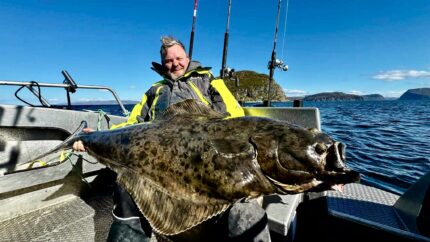
Three halibut weighing more than 50 kilograms each delivered spectacular fights and plenty of excitement on board.
Fish of this size also provide an opportunity to learn how large halibut can be handled carefully and released again.
These are the kinds of fish that help explain why Sørøya is such a sought-after destination among sea anglers.
A big halibut puts both angler and tackle to the test. It also demonstrates exactly why preparation, technique and teamwork on board are so important.
There is one thing anyone travelling to Northern Norway for sea fishing has to accept:
The weather has the final say.
Strong winds on day four meant taking a break from fishing.
After three intensive days on the water, however, the opportunity to recharge was not entirely unwelcome. It was a chance to recover, talk about the fish caught so far and prepare the tackle for the next session.
Tackle was checked, leaders inspected and rigs prepared.
By now, everyone knew that when the next suitable weather window arrived, they needed to be ready.

Day five became another highlight of the trip.
The group landed five impressive halibut, with the biggest fish weighing around 60 kilograms.
The wind increased again during the day, limiting the amount of time available for fishing. That made it even more important to use every suitable hour on the water effectively.
These are the days that stay with you.
Not simply because of the number on the scales, but because of everything surrounding it: the first contact with the fish, the fight, the teamwork on board and finally the moment when a big halibut appears alongside the boat.
On the final fishing day, Sørøya once again showed what these waters can produce.
Several more halibut were caught in the waters close to the camp. Long boat trips to distant fishing grounds were not necessary.
Of course, halibut were not the only fish caught during the week. Numerous cod also took the baits.
But there was never any doubt about the main target species.
It was halibut.
And the group had certainly seen plenty of them.
It is important to mention at this point that most of the fish were carefully released. Only those fish that did not survive were kept.

But that would only tell part of the story.
What really mattered was what the participants learned during their week on Sørøya.
How do you identify promising halibut grounds? How should you set up your tackle? What should you change when the fish are not responding? How do you fight a large halibut properly? And how should everyone on board work together when a truly big fish takes the bait?
That knowledge goes home with the participants and can be applied on future fishing trips.
And that is precisely what makes the combination of a group trip, practical instruction and real fishing experience so rewarding.
The feedback from the various members was that they would return.
By the end of the trip, everyone agreed.
The trip created lasting memories. Everyone learned something new. Large halibut were caught, and other powerful fish were lost during the fight but the area truly shows the potential it holds.
But perhaps the most important sentence from a trip like this has nothing to do with the weight of a fish.
It was the unanimous verdict from the participants:
“We will come back”
And then it will once again be time for halibut fishing on Sørøya.